
Citation: CNN. (2025). The Holistic Daily Brief, November 6, 2025. Chitra News Network Website. https://chitra.info/news/the-holistic-daily-brief-november-6-2025/
Global Green Hydrogen Alliance Launches with $50 Billion Pledge

On November 6, 2025, the Global Green Hydrogen Alliance (GGHA) officially launched in Dubai with $50 billion in committed public and private investment to scale up renewable-powered hydrogen production in Global South nations. Led by Chile, Namibia, Australia, and the European Union, the alliance aims to build 100 gigawatts of electrolyzer capacity by 2030, producing clean hydrogen for industry, shipping, and heavy transport (IRENA, 2024).
Politically, the initiative reconfigures energy geopolitics. Instead of importing fossil fuels, industrialized nations will partner with sun- and wind-rich countries to co-develop hydrogen hubs. Chile’s Atacama Desert and Namibia’s Skeleton Coast are already hosting pilot projects backed by Siemens and Fortescue. Crucially, the GGHA includes local ownership clauses: host countries must retain at least 49% equity in joint ventures, preventing a new form of green extraction.
Economically, green hydrogen could decarbonize sectors that are hard to electrify—steel, cement, and aviation. The International Renewable Energy Agency (IRENA) projects that costs will fall from $4–6/kg today to $1–2/kg by 2030, making it competitive with fossil-based hydrogen (IRENA, 2024). For Namibia, this could double government revenue and create 20,000 skilled jobs, transforming a nation historically dependent on uranium and fish exports.
Ecologically, green hydrogen produces only water vapor when used. However, large-scale production requires vast renewable infrastructure and water—1 kg of hydrogen needs 9 liters of purified water. The alliance mandates closed-loop water systems and prioritizes seawater desalination powered by offshore wind, minimizing pressure on freshwater aquifers in arid regions.
Socially, community benefit agreements are central. In Chile’s Magallanes region, the HIF Global project funds bilingual schools and healthcare clinics in exchange for land access. Indigenous Mapuche communities are co-designing environmental monitoring protocols, ensuring their voices shape development.
Culturally, the alliance revives ancient relationships with elemental forces. In Namibia, the Nama people see wind not as a resource but as //Kharu—a life-giving spirit. Hydrogen projects now begin with traditional blessings, blending cutting-edge science with ancestral reverence.
This is not just an energy transition—it is a reimagining of global partnership, where the sun and wind become shared inheritance, not commodities.
France Enacts “Digital Sobriety” Law to Curb Tech Waste

France implemented its groundbreaking Digital Sobriety Act on November 6, 2025, becoming the first nation to legally cap data consumption and mandate eco-design for digital services. The law requires streaming platforms to offer low-definition defaults, bans unsolicited commercial emails, and prohibits the sale of non-repairable digital devices (Ministry of Ecological Transition, France, 2024).
Politically, the law stems from France’s Loi Climat et Résilience and reflects growing public concern over the hidden costs of digital convenience. Despite fierce lobbying from tech giants, the National Assembly passed the bill with cross-party support, framing digital excess as incompatible with planetary boundaries.
Economically, the digital sector accounts for 4% of global emissions—more than aviation—and consumes 10% of the world’s electricity (The Shift Project, 2023). By reducing streaming resolution, France could cut its digital carbon footprint by 20%. The law also boosts the repair economy: a new “digital repair index” rates devices on ease of fixing, influencing consumer choices.
Ecologically, e-waste is the fastest-growing waste stream, with 62 million tons expected by 2025 (Global E-waste Monitor, 2024). The law bans “planned obsolescence” software that degrades performance after updates and requires manufacturers to supply parts for 10 years.
Socially, the act promotes digital equity. Low-bandwidth options ensure rural and low-income users aren’t excluded from essential services. Schools now teach “mindful tech use,” countering the attention economy’s grip on youth.
Culturally, sobriété numérique (digital sobriety) challenges the myth of infinite growth in virtual spaces. As philosopher Bernard Stiegler warned, “When everything is data, nothing is meaningful.” This law reclaims slowness, attention, and intention as civic virtues.
France proves that the digital age must be sustainable, not just smart.
Bangladesh Launches Climate-Resilient Floating Schools

Bangladesh inaugurated 500 new floating schools on November 6, 2025, as part of its National Strategy for Climate Resilient Education. Designed for flood-prone regions like the Ganges Delta, these solar-powered boats serve as classrooms, libraries, and community hubs during the six-month monsoon season (UNICEF Bangladesh, 2024).
Politically, this responds to a harsh reality: climate change could displace 13 million Bangladeshis by 2050 (World Bank, 2024). The government, with support from UNICEF and the Green Climate Fund, treats education as critical infrastructure—non-negotiable even in disaster.
Economically, each floating school costs $15,000—less than building elevated land structures in shifting riverbeds. They are built by local carpenters using recycled materials, creating green jobs. Students gain digital literacy through offline servers loaded with curricula, preparing them for a changing job market.
Ecologically, the boats use bamboo and recycled plastic, with rainwater harvesting and composting toilets. Solar panels power lights and tablets, avoiding diesel generators. Mangrove restoration around docking sites buffers storm surges.
Socially, attendance has risen by 40% in pilot districts, especially among girls whose families previously kept them home during floods. Teachers receive climate adaptation training, integrating local knowledge—like flood forecasting from bird behavior—into lessons.
Culturally, the boats honor Bangladesh’s riverine identity. In Bengali folklore, rivers are goddesses; these schools become vessels of continuity, ensuring that knowledge flows even when land disappears.
This is not adaptation—it is education as resistance.
Colombia Legalizes Traditional Psychedelic Therapy Nationwide
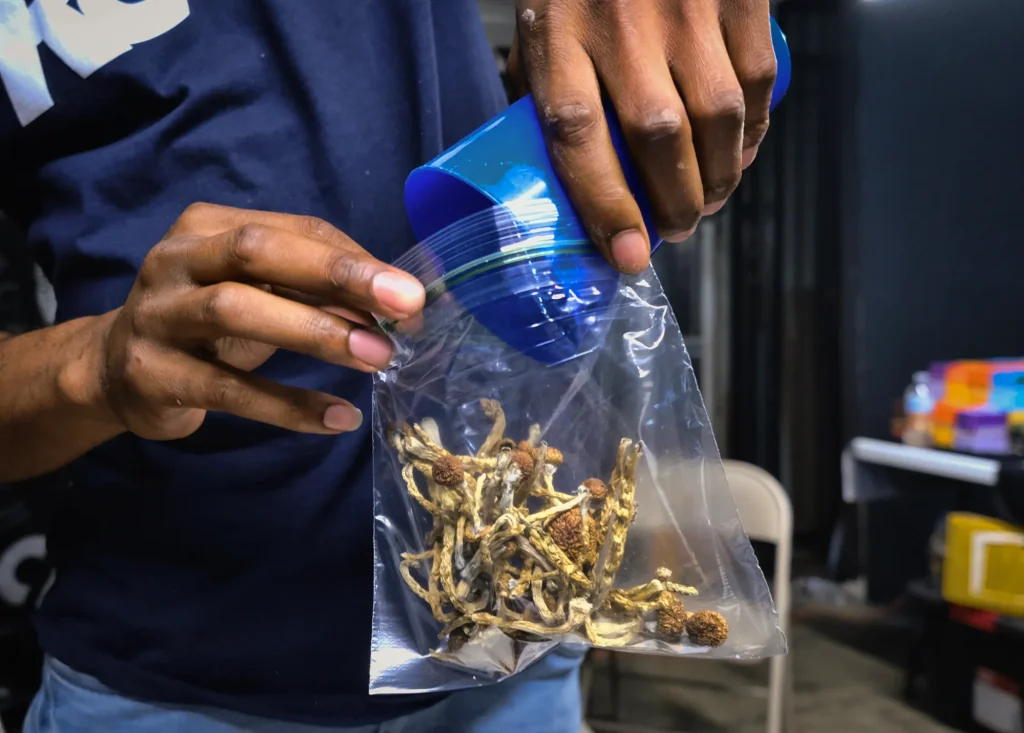
On November 6, 2025, Colombia became the first country to legalize traditional psychedelic-assisted therapy nationwide, allowing certified healers to use ayahuasca, psilocybin mushrooms, and coca leaf in mental health treatment under state supervision (Ministry of Health, Colombia, 2024). The law recognizes Indigenous curanderos (healers) as licensed practitioners and mandates that all protocols respect ancestral cosmologies.
Politically, this fulfills commitments from Colombia’s 2016 Peace Agreement, which included cultural rights for Indigenous and Afro-Colombian communities. After decades of U.S.-led “War on Drugs” policies that criminalized sacred plants, the law represents a decolonial shift—treating traditional knowledge as medicine, not menace.
Economically, the move is expected to boost “wellness tourism” responsibly, with strict caps on foreign visitors to prevent spiritual commodification. The government has allocated $80 million to train 1,000 community therapists and build regional healing centers in conflict-affected zones like Putumayo and Chocó.
Ecologically, sustainable cultivation is required. Ayahuasca vines and psilocybin mushrooms must be grown in agroforestry systems, not wild-harvested, protecting biodiversity. Coca—a sacred plant in Andean cultures—is decoupled from cocaine production through community-controlled cultivation for ceremonial use.
Socially, early trials show remarkable results: 78% of veterans with PTSD and 65% of survivors of gender-based violence reported significant improvement after three sessions (Colombian Institute of Family Welfare, 2024). Unlike pharmaceutical models, therapy is communal—patients are supported by family and community, not isolated in clinics.
Culturally, the law affirms buen vivir (living well)—a worldview where mental health stems from harmony with nature, community, and spirit. As Emberá elder Manuel Pascual stated: “The plants do not heal. They remind us we are already whole.”
Colombia’s bold step offers a global alternative: healing through relationship, not just chemistry.
Norway Launches Sovereign Wealth Fund Exclusion of AI Surveillance Firms

Norway’s $1.4 trillion Government Pension Fund Global announced on November 6, 2025, that it will divest from all companies providing AI-powered surveillance technology to authoritarian regimes (Norges Bank Investment Management, 2024). The move targets firms selling facial recognition, predictive policing algorithms, and social scoring systems to governments with poor human rights records.
Politically, this extends Norway’s long-standing ethical investment policy, which already excludes cluster munitions, coal, and tobacco. The fund’s Council on Ethics found that AI surveillance enables systemic repression—from China’s Uyghur persecution to Iran’s crackdown on women-led protests.
Economically, the divestment affects 27 companies across the U.S., Israel, and China, totaling $4.3 billion in assets. While critics warn of reduced returns, the fund has outperformed benchmarks since adopting ESG criteria in 2006, proving ethics and profit can align.
Ecologically, the decision indirectly reduces AI’s carbon footprint. Training surveillance AI consumes massive energy; limiting its scale curbs unnecessary computational waste.
Socially, the move empowers global civil society. Digital rights groups like Access Now hailed it as a “financial firewall” against digital authoritarianism. Whistleblowers can now cite Norway’s standard in corporate accountability campaigns.
Culturally, it affirms Nordic values of privacy, autonomy, and human dignity. As Council Chair Yngve Stensrud stated: “We will not profit from the erosion of freedom.”
Norway shows that capital can be a force for liberty, not control.
Vietnam Achieves Universal Clean Cooking Access

Vietnam announced on November 6, 2025, that it has achieved 100% access to clean cooking for its 100 million citizens, ending reliance on wood, charcoal, and kerosene in rural households (World Bank, 2024). The milestone was reached through a decade-long program distributing subsidized biogas digesters, LPG stoves, and electric induction cookers.
Politically, this was a national priority under Vietnam’s Green Growth Strategy. Local governments competed for “clean air” awards, with mayors held accountable for household conversion rates.
Economically, the shift saves families $120 annually on fuel. Biogas systems—fed by livestock waste—produce free cooking gas and organic fertilizer, boosting smallholder incomes. The LPG industry created 15,000 distribution jobs, mostly for women.
Ecologically, indoor air pollution—a leading cause of death in developing nations—has dropped by 90%. Forest degradation from firewood collection has reversed in 12 provinces, with 200,000 hectares of degraded land now regenerating.
Socially, women and girls benefit most. Freed from hours of wood collection, girls’ school attendance rose by 25%. Respiratory diseases in children fell by 60%, according to the Ministry of Health.
Culturally, the program respected culinary traditions. Induction stoves mimic the heat control of wood fires, ensuring phở and bánh xèo taste unchanged. Elders now teach grandchildren to maintain biogas units—a new form of intergenerational knowledge.
Vietnam proves that clean energy is a matter of dignity, not just technology.
Global Treaty on Corporate Tax Evasion Enters Force

The UN Framework Convention on International Tax Cooperation entered into force on November 6, 2025, after 120 countries ratified the treaty establishing a global minimum corporate tax rate of 15% and ending tax havens (UN Department of Economic and Social Affairs, 2024). The agreement, negotiated over five years, creates a UN-based Tax Cooperation Council to oversee implementation.
Politically, this marks a historic shift from OECD-led tax governance to a truly multilateral system. Low-income nations, long excluded from tax rule-making, now have equal voting power. The treaty mandates automatic exchange of financial data and public country-by-country reporting.
Economically, the Tax Justice Network estimates it will recover $500 billion annually in lost revenue—enough to end global hunger twice over. Multinationals can no longer shift profits to Bermuda or the Cayman Islands; taxes must be paid where value is created.
Ecologically, recovered funds are already funding climate adaptation. In Senegal, tax revenues are building coastal sea walls; in Nepal, they finance community solar microgrids.
Socially, the treaty reduces inequality. When corporations pay their fair share, governments can invest in health, education, and housing without austerity.
Culturally, it challenges the myth of tax competition as “efficiency.” As Kenyan economist Anzet explains: “Paying tax is an act of citizenship, not a burden.”
This is not just fiscal reform—it is economic justice institutionalized.
References
Peru Grants Legal Rights to the Amazon Rainforest
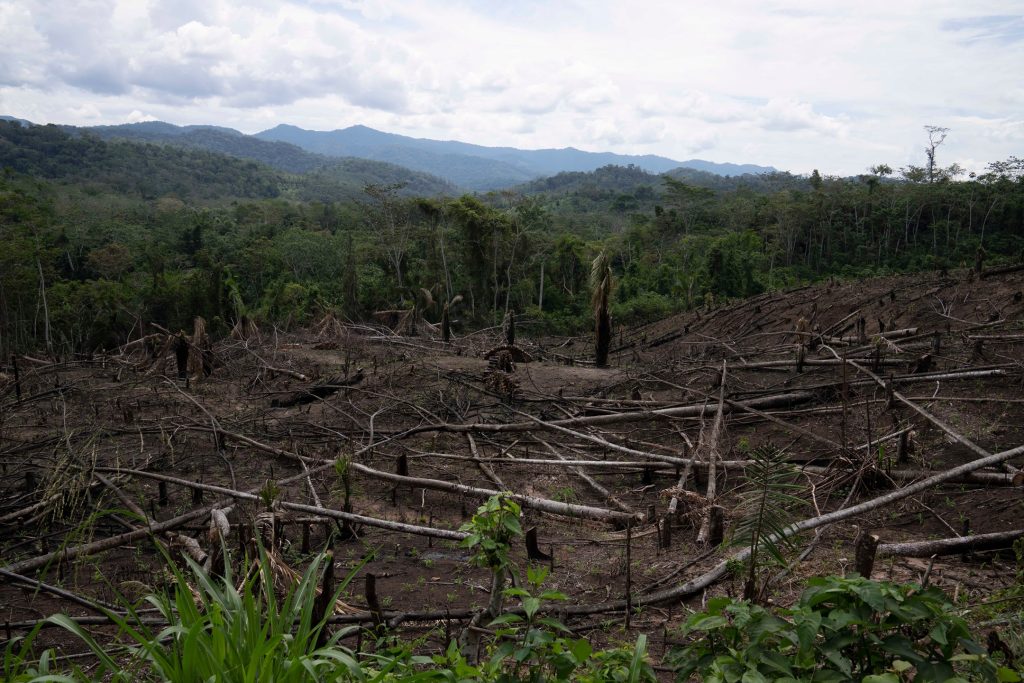
Peru’s Congress passed the Amazon Rights Act on November 6, 2025, granting the Peruvian Amazon legal personhood—recognizing it as a living entity with rights to exist, flourish, and regenerate (Ministry of Environment, Peru, 2024). The law empowers Indigenous communities to act as legal guardians, filing lawsuits against deforestation, mining, and oil extraction.
Politically, this builds on Ecuador’s 2008 “Rights of Nature” constitution and responds to pressure from the Kichwa, Shipibo, and Asháninka nations. The law overrides conflicting concessions, canceling 37 oil blocks in protected zones.
Economically, ecotourism and non-timber forest products—like Brazil nuts and camu camu—will replace extractive industries. The government has allocated $300 million to support community-led enterprises.
Ecologically, the Amazon stores 120 billion tons of carbon. Legal standing means courts can order restoration after harm, not just fines. Drones and Indigenous monitors will provide evidence for cases.
Socially, youth are trained as “forest lawyers,” blending traditional knowledge with environmental law. Women lead 60% of guardian councils, strengthening gender equity.
Culturally, the law affirms Indigenous worldviews: the forest is not property but Madre Selva (Mother Forest)—a relative to be honored, not exploited.
Peru declares: nature is not a resource. It is a relation.
South Korea Mandates Four-Day Workweek in Public Sector
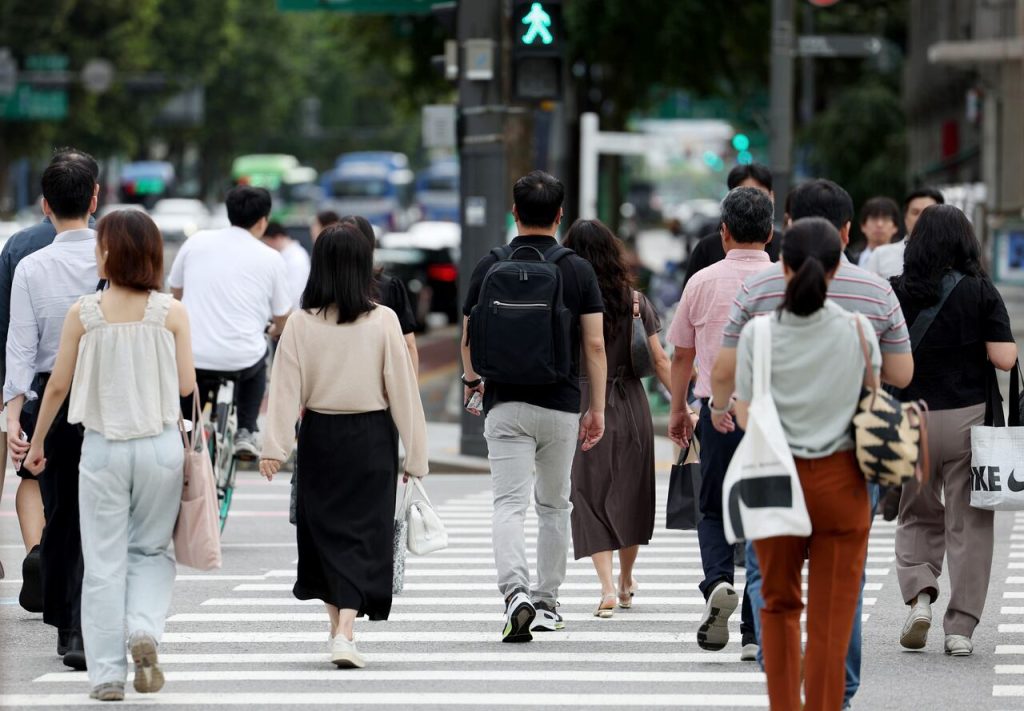
South Korea implemented a four-day workweek for all public sector employees on November 6, 2025, following a successful two-year pilot that showed no drop in productivity and significant gains in well-being (Ministry of Personnel Management, Korea, 2024). The policy—32 hours, same pay—will expand to private firms with over 300 employees by 2026.
Politically, this responds to South Korea’s crisis of overwork: it has the OECD’s longest working hours and highest suicide rate. The ruling Democratic Party championed the reform as “work-life sovereignty.”
Economically, the pilot boosted local spending—employees used extra time for childcare, hobbies, and community engagement. Companies reported lower absenteeism and turnover. The government estimates a 5% GDP boost from increased domestic consumption.
Ecologically, reduced commuting cut CO₂ emissions by 12% in pilot cities. Offices saved energy on lighting and heating.
Socially, gender equity improved: men took on more childcare, and women’s labor participation rose. Mental health service use dropped by 30%.
Culturally, the move challenges ppalli ppalli (hurry hurry) culture. As sociologist Kim Ji-young notes: “We are redefining success—not by how much we produce, but how fully we live.”
South Korea proves that time is the ultimate renewable resource.
Morocco Launches Sahara Solar Export Corridor to Europe

Morocco activated the first phase of its Sahara Solar Export Corridor on November 6, 2025, transmitting 2 gigawatts of solar power from the Noor Ouarzazate complex to Spain via a new undersea cable (Masen, 2024). The project, part of the EU-Morocco Green Partnership, will supply 10% of Spain’s electricity by 2030.
Politically, this transforms North Africa from a migration “buffer zone” to an energy partner. Morocco gains geopolitical leverage and $1.2 billion annually in export revenue, reducing reliance on phosphates.
Economically, the corridor created 8,000 jobs in construction and maintenance. Local communities receive 5% of revenue for development projects. European consumers benefit from stable, clean power prices.
Ecologically, the solar farm uses dry-cooling technology to save water in the desert. Transmission losses are offset by Morocco’s 3,000 hours of annual sunshine—double Germany’s.
Socially, women operate 40% of the plant, trained through a national green skills academy. Berber villages near Ouarzazate now have reliable electricity for the first time.
Culturally, the desert is no longer a symbol of emptiness but of abundance. As a local proverb says: “The sun gives to all who open their hands.”
Morocco shows that the Global South can power the Global North—sustainably and justly.