
Citation: CNN. (2025). The Holistic Daily Brief, November 5, 2025. Chitra News Network Website. https://chitra.info/news/the-holistic-daily-brief-november-5-2025/
Global Seed Vault in Svalbard Reaches 2 Million Accession Milestone

On November 5, 2025, the Svalbard Global Seed Vault in Norway received its 2 millionth seed sample, marking a historic milestone in planetary food security. The new deposit includes climate-resilient varieties of wheat from Syria, drought-tolerant maize from Zimbabwe, and salt-resistant rice from Bangladesh—crops developed by farmers and scientists to withstand intensifying climate disruptions (NordGen, 2024).
Politically, the vault is a rare symbol of global cooperation in a fractured world. Jointly managed by Norway, the Crop Trust, and the Food and Agriculture Organization (FAO), it operates as a “fail-safe” backup for over 1,700 gene banks worldwide. Recent deposits from Ukraine and Sudan highlight its role during conflict, ensuring agricultural heritage survives war.
Economically, seed diversity underpins a $5 trillion global food system. As monocultures dominate industrial farming—just 12 crops supply 75% of calories—the vault safeguards genetic traits that could save harvests from emerging pests, heatwaves, or floods. The Crop Trust estimates that every $1 invested in seed conservation yields $18 in future agricultural resilience (Crop Trust, 2024).
Ecologically, biodiversity is the bedrock of adaptation. Traditional seeds often require less water, fertilizer, and pesticides than commercial hybrids. In Ethiopia, farmers using vault-sourced teff varieties have maintained yields despite 2°C temperature rises.
Socially, the vault centers farmers as innovators. Unlike corporate gene patents, these seeds are held in trust for humanity. Community seed banks in India and Peru now link directly to Svalbard, creating a two-way flow of knowledge.
Culturally, seeds carry memory. Syrian refugees deposited ancient durum wheat varieties grown for centuries in Aleppo—a living archive of identity. As one deposit note read: “This is not just grain. It is our grandmother’s hands.”
In an age of extinction, the vault is more than a freezer—it is a covenant with future generations.
South Africa Enacts Land Reform Bill After Decades of Struggle

South Africa’s Parliament passed the Expropriation Without Compensation Amendment Bill on November 5, 2025, enabling the state to redistribute agricultural land to Black farmers and communities dispossessed under apartheid (Parliament of South Africa, 2024). The law caps compensation at “just and equitable” levels—often zero for unused or speculative holdings—and prioritizes women-led cooperatives.
Politically, this fulfills a 30-year promise of the African National Congress. After court battles and white farmer resistance, the bill includes safeguards: no arbitrary seizures, independent valuation panels, and support for new farmers. Minister Thoko Didiza called it “economic justice in action.”
Economically, land inequality remains stark: 72% of farmland is owned by 4% of the population, mostly white (World Bank, 2024). Redistribution aims to boost smallholder productivity, which could increase rural GDP by 15%. The government has allocated $2.1 billion for training, irrigation, and market access.
Ecologically, new owners are adopting agroecology—reducing chemical inputs, restoring soil health, and diversifying crops. In Limpopo, reforested buffer zones now protect rivers from erosion.
Socially, land is tied to dignity. For elders like Nomsa Khumalo, 78, receiving a title deed means “finally being seen as human.” Youth are returning to farms, reversing urban migration.
Culturally, the land is ancestral. Ceremonies now mark transfers, honoring spirits of place. As one Zulu chief said: “We do not own the land. We belong to it.”
This is not redistribution—it is restoration of belonging.
Global Ban on PFAS “Forever Chemicals” Takes Effect in EU and Canada
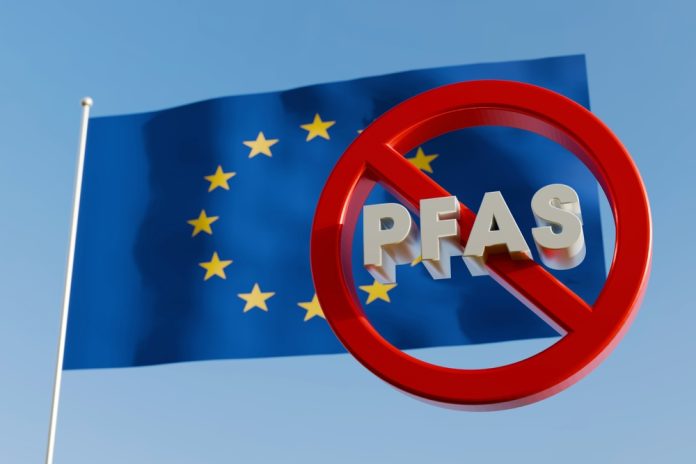
On November 5, 2025, the European Union and Canada jointly enforced a near-total ban on per- and polyfluoroalkyl substances (PFAS), a class of 12,000 synthetic chemicals used in non-stick cookware, waterproof clothing, and food packaging (European Chemicals Agency, 2024). Known as “forever chemicals” for their persistence, PFAS have been linked to cancer, infertility, and immune dysfunction.
Politically, the ban follows a 2023 petition by 180 scientists and 40 civil society groups. The U.S. EPA has proposed similar rules but faces industry lawsuits. The EU-Canada alliance creates a powerful regulatory bloc that may force global supply chains to comply.
Economically, companies must innovate. Patagonia now uses plant-based water repellents; IKEA has phased out PFAS in textiles. The green chemistry sector is projected to grow 20% annually through 2030 (OECD, 2024).
Ecologically, PFAS contaminate 99% of human blood samples and are found in rainwater globally (UNEP, 2024). Banning production prevents further pollution of soil and water.
Socially, frontline communities suffer most. In Michigan and Ontario, drinking water near factories showed PFAS levels 1,000 times above safety limits. The ban mandates cleanup funding.
Culturally, the move challenges “convenience culture.” Consumers are embracing durable, uncoated alternatives—a return to simplicity.
This is not regulation—it is toxic colonialism in reverse.
Bhutan Launches Gross National Happiness Index 3.0

Bhutan unveiled GNH Index 3.0 on November 5, 2025, updating its pioneering alternative to GDP with new metrics for digital well-being, ecological citizenship, and intergenerational equity (Centre for Bhutan & GNH Studies, 2024). The index now guides all policy, from education to infrastructure.
Politically, GNH remains central to Bhutan’s identity. The 2008 constitution mandates that at least 60% of land stay forested—a target exceeded at 71%.
Economically, GNH prioritizes local resilience over growth. Tourism is “high-value, low-volume,” with a $200 daily fee funding healthcare and education.
Ecologically, every citizen plants 108 trees in their lifetime. Carbon-negative since 2019, Bhutan absorbs 6 million tons of CO₂ annually.
Socially, community vitality scores include time spent in festivals, volunteering, and intergenerational storytelling.
Culturally, GNH is rooted in Buddhist values: compassion, balance, and non-attachment to materialism.
Bhutan proves that progress can be measured in joy, not just output.
Global Coalition Bans Export of Fossil Fuel Subsidies

A coalition of 45 nations, led by Denmark and Costa Rica, launched the Fossil Fuel Subsidy Transparency and Elimination Pact on November 5, 2025, banning public finance for overseas oil, gas, and coal projects (OECD, 2024). The pact covers export credits, development banks, and investment guarantees.
Politically, it closes a loophole: while domestic subsidies are debated, G7 nations spent $28 billion annually on fossil exports until 2024 (OCI, 2024).
Economically, redirected funds now support renewable mini-grids in Africa and Asia. Denmark’s EKF export credit agency has shifted $1.2 billion to solar projects.
Ecologically, ending export finance could prevent 100 new coal plants and 50 LNG terminals by 2030.
Socially, communities in Mozambique and Indonesia, long targeted for extraction, now have leverage to say no.
Culturally, it rejects the “charity” model of development—where the Global North funds both the problem and the solution.
This is climate justice in fiscal policy.
New Zealand Recognizes Animal Sentience in Law

New Zealand’s Parliament passed the Animal Welfare Amendment Act on November 5, 2025, legally recognizing all vertebrates and cephalopods as sentient beings with rights to positive welfare (Ministry for Primary Industries, NZ, 2024).
Politically, this builds on NZ’s 2015 recognition of great apes. The law bans live exports, factory farming of pigs and chickens, and cosmetic testing.
Economically, farmers receive subsidies to transition to free-range systems. Plant-based meat exports are projected to reach $500 million by 2027.
Ecologically, reduced livestock numbers lower methane emissions and water pollution.
Socially, schools now teach compassionate coexistence. Animal welfare officers have enforcement powers.
Culturally, Māori concepts like whakapapa (interconnectedness) inform the law.
New Zealand affirms: to feel is to matter.
Brazil Launches Indigenous-Led Amazon Monitoring Network

Brazil activated the Indigenous Environmental Monitoring Network (REMAI) on November 5, 2025, equipping 600 Indigenous communities with drones, satellite phones, and AI-powered apps to detect deforestation and illegal mining in real time (FUNAI, 2024).
Politically, this fulfills Lula’s promise to return guardianship to forest peoples. Data is shared directly with federal enforcement agencies.
Economically, communities earn income as “forest guardians,” funded by the Amazon Fund.
Ecologically, early alerts have reduced deforestation response time from 30 days to 48 hours.
Socially, youth are trained as tech stewards, blending tradition and innovation.
Culturally, monitoring is framed as cuidar (to care), not surveillance.
This is decolonized conservation.
References
Germany Closes Last Coal Plant Ahead of Schedule

Germany shut down its final coal-fired power plant in Neurath on November 5, 2025, eight years ahead of its original 2038 deadline (BMWK, 2024). The move caps a Energiewende (energy transition) that now runs on 52% renewables.
Politically, the phaseout followed massive Ende Gelände protests and the 2022 energy crisis.
Economically, 60,000 coal jobs were transitioned to solar, wind, and battery manufacturing via the Coal Exit Act.
Ecologically, CO₂ emissions fell 42% below 1990 levels.
Socially, former mining regions received $40 billion in structural funds for retraining and infrastructure.
Culturally, the Energiewende reflects a societal pact: progress through collective responsibility.
Germany proves that industrial nations can quit fossil fuels.
Global Fund for Mental Health Launches with $1 Billion Pledge
The World Health Organization and UNICEF launched the Global Fund for Mental Health on November 5, 2025, with $1 billion in initial pledges to expand community-based care in low-income countries (WHO, 2024).
Politically, mental health was long neglected in global health. The fund rectifies this imbalance.
Economically, every $1 invested yields $4 in productivity gains (World Bank, 2024).
Ecologically, climate anxiety is rising—youth in flood-affected regions show PTSD rates of 35%.
Socially, the fund trains community health workers, reducing stigma.
Culturally, it integrates traditional healing—like drumming circles in Uganda or talk therapy in Indigenous communities.
Mental health is not a luxury—it is foundational to human dignity.
Tunisia Adopts Gender-Equal Inheritance Law

Tunisia’s Parliament passed a landmark Gender-Equal Inheritance Law on November 5, 2025, granting daughters and sons equal rights to family assets—a first in the Arab world (UN Women, 2024).
Politically, this fulfills demands from Tunisia’s feminist movement since the 2011 revolution.
Economically, women’s property ownership boosts entrepreneurship and financial independence.
Ecologically, land-owning women are more likely to invest in sustainable agriculture.
Socially, the law challenges patriarchal norms while respecting religious diversity—individuals may opt into or out of it.
Culturally, it reinterprets Islamic jurisprudence through ijtihad (independent reasoning), showing tradition and equality can coexist.
Tunisia affirms: justice has no gender.